Big Tech vs. OpenClaw
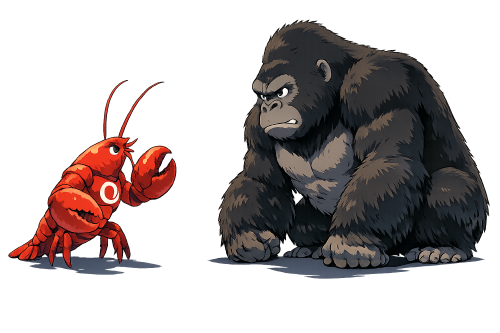
OpenClaw launched last week. If you haven’t tried it yet, it’s essentially a way for AI to control your computer on your behalf. You describe what you want done, and it does it—clicking, typing, navigating, the whole thing.
It’s impressive technology. But the most interesting thing about OpenClaw isn’t what it can do. It’s what it means for the companies that have spent the last fifteen years figuring out how to capture and hold our attention.
Here’s the thing about social media that nobody at these companies will say out loud: the product only works if you’re using it badly. Facebook and LinkedIn don’t make money when you efficiently check your messages and leave. They make money when you intended to check your messages but somehow ended up scrolling for forty-five minutes through engagement-optimized content you never asked for.
OpenClaw breaks this model. I can now say “notify me when someone sends me a LinkedIn message, but filter out the recruiters and the people trying to sell me marketing services.” That’s it. I never have to open LinkedIn again. I get the utility of the network without the tax of the feed.
This might sound minor, but I think it’s actually a very big deal.
Consider what LinkedIn has really become. Ostensibly it’s a professional network. In practice, it’s one of the most valuable proprietary datasets on the planet. Most VC firms I know are scraping it, one way or another. It’s one of those open secrets in the industry—a lot of people are doing it, nobody talks about it publicly, and LinkedIn seems to look the other way as long as you’re not too blatant about it.
Before OpenClaw, getting useful data out of LinkedIn required either paying a fortune for their official APIs (which are deliberately hobbled), or building and maintaining sophisticated scraping infrastructure that played an endless cat-and-mouse game with their bot detection. Only well-funded companies could do it effectively.
Now? Any VC with a spare Mac Mini can fully automate their deal sourcing. OpenClaw will just log in as you, browse around, and extract whatever you need. It’s not even really “scraping” in the traditional sense—it’s just using the site the way a human would, except the human is an AI following your instructions.
The obvious question is: how will these companies respond?
The first line of defense is CAPTCHAs. LinkedIn and Facebook already have state-of-the-art bot detection. They could turn up those knobs. But there’s a limit to how far they can push this without alienating legitimate human users. Make the friction too high and people stop using your product. And crucially, OpenClaw isn’t really distinguishable from a slow, methodical human user. The patterns are the same. The pixels are the same.
My hunch is that we’re going to see a hard push toward native apps.
If you’re running a hypothetical native LinkedIn app on your Mac, that app can inspect your machine. It can see what processes are running. It can detect screen recording. It can phone home and report suspicious activity. A native app has capabilities that a website in a browser simply doesn’t have.
Why do these companies push their native apps so aggressively? Why does Reddit constantly nag you to install their native app? I always assumed it was just about engagement metrics or notification permissions. But now I wonder if part of the reason is that native apps are defensible in ways that websites aren’t.
Longer term, I wonder if we’re going to see something even more aggressive: computer-use DRM.
OpenClaw is currently the most popular tool in this space, but it’s really just part of a broader “computer-use” category that’s emerging. Anthropic, Google, and several startups are all building AI that can operate a computer the way a human does. This isn’t going away. If anything, it’s going to get much better very quickly. The question isn’t whether computer-use AI will become ubiquitous—it’s whether platforms will find ways to lock it out.
And this isn’t as far-fetched as it sounds. We already have precedent. Try taking a screenshot of Netflix content in your browser. On most systems, you’ll get a black rectangle. The browser, working with the operating system, actively prevents you from capturing DRM-protected video content. This isn’t a bug—it’s a feature, negotiated between content companies and platform vendors.
Imagine the same technology applied to social media. Your operating system could expose an API that tells apps whether any automation software is running. LinkedIn’s website could simply refuse to render if it detects OpenClaw. Apple and Microsoft, under pressure from major advertisers, might be convinced to build these capabilities directly into their platforms.
Would this happen? A year ago I would have said no. Platform vendors have historically positioned themselves as neutral—they provide the infrastructure, they don’t pick sides in fights between applications. But the pressure from big tech is enormous, and the advertising dollars are real.
The optimistic case is that this is the beginning of the end for attention-harvesting as a business model. If users can finally automate away the junk and extract just the value from these networks, maybe the networks will have to evolve. Maybe LinkedIn becomes a pure utility—a directory and messaging service—and finds some other way to make money. Maybe Facebook finally has to compete on actual value rather than addictiveness.
The pessimistic case is that we get a new kind of platform lock-in. Not just network effects keeping you on a platform, but actual technical barriers preventing you from using that platform in any way other than what the company intended. An internet where the sites you visit can veto the software you run.
I don’t know which way this goes. But it does seem like OpenClaw and tools like it represent something new in the balance of power between users and platforms. For the first time in a long time, users have a tool that lets them interact with these services on their own terms.
Big Tech has gotten very good at capturing human attention. Now they may have to figure out how to capture attention from robots. That’s a different game, and I’m genuinely curious to see how they’ll play it.